Articles Comments

David Porter » Articles at Suite 101

USA and UK, Two Countries Divided by the Same Language

Burberry Purse in USA; Handbag in UK - Dan Smith

While American-English & British-English are similar but different in spellings and shades of meaning, text-speak could render all differences academic.

It seems that nobody agrees who first said that England and America are two countries separated by the same language. The 1951 Treasury of Humorous Quotations quotes Irish playwright, George Bernard Shaw, as saying it, but not necessarily originating it.

An earlier candidate is Oscar Wilde, who wrote in The Canterville Ghost (1887), ‘We really have everything in common with America now except, of course, language”. Although later, war time Prime Minister Sir Winston Churchill is sometimes also cited as the originator.

Philosopher Bertrand Russell, writing in Saturday Evening Post, June 1944, said: ‘It is a misfortune for Anglo-American friendship that the two countries are supposed to have a common language’. In a radio talk prepared by Welsh poet Dylan Thomas published in The Listener, April 1954, he said: ‘European writers and scholars in America are up against the barrier of a common language’.

Whoever coined it, it’s probably always been true. During the War, American GIs stationed in Britain were puzzled and took time to adjust to English food, warm beer and strange local expressions. Both versions are living languages, absorbing words, inventing new ones constantly.

Translating American-English to British-English

Today, familiar movies, TV programmes and books mean people can translate as they go along, either side of the Atlantic, making allowances, needing no dictionaries. Spell-checks are a problem in England sometimes, as the majority use American spelling, even if programmed otherwise.

Both sides recognise the following terms, with English equivalents in brackets, if the talk is about motoring: a hood (bonnet) and trunk (boot) on a car with a license plate (number plate) needs gas (petrol) to travel on the overpass (flyover). In a restaurant, a customer may have had French fries (chips) or chips (crisps), wiped fingers on a napkin (serviette) and at the end called for the check (bill), and pays cash in dollar bills (pound notes).

An eraser is a rubber in Britain, while a rubber in the US becomes a condom in the UK. An American purse is an English handbag; a fanny Stateside is a British backside or bum, which becomes American bum (scrounger), while a fanny in English is female genitalia.

A cigarette in some parts of England can be called a fag, which in America means a homosexual, though both sides now use gay. A subway in a US city is the underground or tube in an English one; a pedestrian tunnel is a subway, a pavement is a road surface and a sidewalk is a pavement. The elevator is a lift, an apartment is a flat, pants are trousers.

Most People Know What They Mean

A lawyer is a solicitor, a solicitor is a door-to-door salesperson; an attorney a barrister and a realtor an estate agent. Pants are trousers, suspenders become braces, a garter belt is suspenders, a baby carriage is a pram and a diaper is a nappy.

An argument in America is also a row in Britain; band aid is a plaster, while the bathroom is the loo or WC (water closet, originally) and a bathroom is where the loo may be situated. A can is a tin, chopped beef is mince (which in England is also a sweet concoction of fruit and spices), a cookie is a biscuit and maize is corn. A flashlight is better known as a torch and a guy is usually a chap or bloke, though younger people of either sex nowadays answer to the word guy. In England a guy is also a stuffed dummy burned on a bonfire on 5th November to celebrate a failed coup by Guy Fawkes against King James 1 in 1605.

People stand in line in US, they queue in Britain; a motor home is a caravan and the mail is the post, a movie theater is a cinema, a pharmacist is a chemist, to rent is to hire, to play soccer is to play football (which is something else again in the States), a sweater is a jumper ; a vacation is a holiday and a zipcode is a postcode.

Even when the same word is used by both sides with broadly the same meaning, the spellings can be different for no obvious reasons. Just a few examples reveal some tiny but significant differences, American first, English second: enrollment/enrolment; catalog/catalogue; theater/theatre; recognize/recognise; color/colour; defense/defence; jewelry/jewellery; pajamas/pyjamas; tire/tyre; and program/programme.

There are differences in customs, following on from language. There’s no Thanksgiving in the UK, and until the last decade or so, Trick Or Treat, cheerleading and high school proms were things seen only in American movies and fiction. Now they are everywhere.

Eventually, as text-speak and the brevity of emails/messaging evolve, they’ll have a profound effect on written and spoken language, and the differences will be smoothed out. In the meantime, people can cherish the subtle variations.That’s it, folks (people). Period. (full stop).

First published on Suite 101, 8 April 2010.

Photo: Burberry Purse in USA; Handbag in UK – Dan Smith

Read on

Filed under: Articles at Suite 101

British People Have Become the Most Watched & Recorded on Earth

Surveillance Cameras - Quevaal
Big Brother systems watch each UK citizen 3,000 times and record over 3,000 pieces of personal information, every week.

These figures were unearthed by the Daily Telegraph in August 2008, and on one level are strangely reassuring – more cameras (one for every 10 people) should mean less crime. Channel 4 News estimated in 2004, Britain had 4 million public and private cameras, 20% of the global total. However, more crime is being committed, so are Brits being watched to meet other agendas?

When people feel watched by eyes on posters (like recently at the rail station in Brighton, England), the effect is beneficial. When motorists see a cardboard cut-out of a police car at a roadside, they reduce speed instinctively.

Either way, watching eyes, real or through lenses, are an eerie reminder of George Orwell’s post-war warning, Nineteen Eighty-Four, which created the notion of Big Brother, Room 101 (where people face their greatest fears) and Thought-crime.

Surveillance Unlimited, Inspired by Literature

According to Keith Laidler in his 2008 book, Surveillance Unlimited, not only are we seeing Orwell’s nightmare coming to fruition, it’s an uncaring bureaucratic machine prone to uncorrectable mistakes with dreadful consequences for individuals, in echoes of another classic, The Trial, as envisioned in 1925 by Franz Kafka.

A third classic fiction worth citing is Aldous Huxley’s 1931, Brave New World, the title taken from Shakespeare’s play, The Tempest. In the novel, high-tech consumer lifestyles make people ever more dependent on drug-fuelled quick fixes, which They allow citizens to enjoy when They decide they shall be enjoyed.

Everyone’s grown accustomed to the government of the day listening to messages, phone and internet activity around the globe, to keep the land secure from enemies, from terrorists and organised crime. But, in the name of anti-terrorism now, (just like in the name of anti-Nazism in the 1930s and 40s, and the name of anti-communism from 1940s to the 90s), almost any act of monitoring, watching, judging what people do and say, is sanctioned.

Laidler examines systems for watching and storing data from mobile phone location systems, dataveillance, electronic communications interception, communications data traffic analysis, RFID chips, web cookies, Automatic Number Plate Recognition, Identity Card databases, biometrics, CCTV surveillance and sousveillance, which is recording from the perspective of participants in an activity, like police helmet cameras.

He also looks at the way supermarkets and the private sector routinely gather and store data to improve future profitability and direct marketing. Information from electoral roles, postcodes, shopping habits using loyalty cards, credit card and other purchases logged in the name of anti-ID fraud… the list goes on. Most accept much of this as inevitable, and some of it actually improves their lifestyles.

Fighting Back

Some people fight back against speeding fines triggered by hidden cameras; against revealing more personal information than is essential to conduct one’s daily business in Britain. That’s applauded in some quarters as a brave stand, but laws now enable police to intervene where they suspect crimes might be committed, where people expressing an opinion can be accused of inciting hatred or violence in others, or where people cannot take photos deemed to be a ‘danger’.

However, as much surveillance is covert, it’s impossible to combat. If a person’s car is tracked on satellite, his/her face recognised automatically by camera, his/her emails and phone calls monitored, every website he/she visits logged and even his/her mobile phone switched off still reveals his/her whereabouts – how can anybody avoid being watched?

Life Imitating Art

The Steven Spielberg 2002 movie, Minority Report, loosely based on a short story by Philip K. Dick, features a specialised police unit called Precrime which captures criminals before they commit any crime using foreknowledge from psychics. The jump to using predictive behaviour based on past and present activity to take ‘future criminals’ out of our society is not as fanciful as it sounds, if all the data held on each individual is pooled.

As the tendency to merge bigger, more detailed systems, to acquire and hold ever more information, from health and education/training/work records, to how much rubbish we throw out, to driving/buying/fiscal/tax history, to entertainment/relationship/food preferences to biometric identity takes hold, then the science fiction may become the norm.

Information is not only of interest to governments and their agencies, but equally to criminals. Knowledge has always represented power, and all that accumulated data is so powerful that nobody can be confident it’s secure. In November 2007, the British Government had to admit losing names, birthdates, addresses, child benefit, national insurance numbers and bank account details of 25 million citizens.

It wasn’t the only security breach. No system is fool-proof. So what price must humanity pay for non-criminal private and personal activities in lives? The 2010 General Election will probably not be discussing that question.

Sources:

  • Surveillance Unlimited: How We’ve Become the Most Watched People on Earth by Keith Laidler, published by Icon Books, May 2008. ISBN 978-184046877-9

First published on Suite 101, 8th April 2010.

Photo: Surveillance Cameras – Quevaal

Read on

Filed under: Articles at Suite 101

Aliens and Strange Creatures in Movies, Songs and Literature

Inflatable Aliens - Lewis Francis
Nobody knows what extra-terrestrials from other planets look like, but the earthly creative arts world is happy to speculate wildly and profitably.

On April Fools Day 2010, a Jordanian newspaper, Al Ghad, carried a front page story of 10-foot aliens from a flying saucer landing near the desert town of Jafr. The Mayor sent out security services. It was a deliberate hoax from enterprising journalists.

The War of the Worlds 1938 incident was unplanned, but had a similar effect. It was broadcast on CBS radio on 30 October as a Halloween episode of Theatre-of-the-Air, adapted from the HG Wells’ 1898 novel, War of the Worlds, directed and narrated by Orson Welles.

This kick-started his career. It ran without commercial breaks, opening with simulated live news reports, leading listeners to believe an alien invasion was actually under way. In New York/New Jersey, it caused mass hysteria, which turned to outrage and the drama was condemned as cruelly deceptive.

Aliens in the Movies

Over 350 movies utilise alien fantasies, imaginings or partial truths. They range from laughable/unlikely, to serious pieces of film art. They’ve sparked books, films, merchandising and cult followings. Most treat aliens as hostile to humankind.

Some of the best known across that huge range include: 2001: A Space Odyssey (1968); The Abyss (1989); Alien (1979); Alien vs. Predator (2004); Avatar (2009); Barbarella (1968); The Blob (1958); Close Encounters of the Third Kind (1977); and Coneheads (1993).

There is also: E.T. Extra-Terrestrial (1982); Flight of the Navigator (1986); I Married a Monster from Outer Space (1958); Independence Day (1996); The Man Who Fell to Earth (1976); Men in Black (1997 & 02); Muppets from Space (1999); Species (1995, 98, 04, 07) and WALL-E (2008).

Long-running franchises are built on aliens: Star Trek (1979-2008); Star Wars (1977-2008); Superman (1978-1987), and The Transformers (1986-2007), while War of the Worlds made it onto film in 1953 and 2005. The X Files carried alien theories from TV screens into people’s minds from 1993-2002.

Aliens in Popular Songs

Almost as varied as films, song titles and lyrics have been inspired by a fairly stereotypical view of aliens. The Steve Miller Band have had two: Space Cowboy and The Joker, while Ray Stevens turned the Elvis Presley lives theory into I Saw Elvis in a UFO.

The Carpenters did Calling Occupants of Interplanetary Craft; Subterranean Homesick Alien came from Radiohead; Space Oddity from David Bowie; Space Truckin‘ from Deep Purple; U.F.O. Has Landed in the Ghetto by Ry Cooder and the English political activist Billy Bragg recorded My Flying Saucer. Barker of the UFO was an early Bee Gees’ offering and Waiting for the UFOs was done by Graham Parker & The Rumour

Aliens in Literature

Writers have long speculated about other life forms and worlds. An early example was a French 1864 publication by Camille Flammarion, Imaginary Worlds and Real Worlds, which was exploited in 1887 by JH Rosny Aîné, in a short story describing an evolutionary death war between prehistoric humans and crystal-based life-forms.

In 1901, HG Wells published The First Men in the Moon, which has antlike creatures and then bug-eyed monster invasion stories became a staple of science fiction. Stanley G. Weinbaum’s A Martian Odyssey (1934), presents aliens whose harmless behaviour is incomprehensible to human sensibilities.

Other authors include Olaf Stapledon, with Star Maker (1937) which follows a man’s mind travelling space and time. His galactic empires, alien life, genetic engineering inspired many, including Arthur C.Clarke, whose 1953 Childhood’s End shows a benign earth conqueror, The Overlords.

A long list of colourful, imaginative and fantastic aliens would not be complete without the Aalaag from Gordon R. Dickson’s 1987 novel, Way of the Pilgrim; Psychlos, universe conquerors, from the L.Ron Hubbard’s novel Battlefield Earth; Alan Dean Foster’s believable Thranx from 1982’s Nor Crystal Tears; and the disastrous little green Martians in Fredric Brown’s 1955 Martians, Go Home.

Inter-species communication between the pequeninos and humans is at the heart of two credible novels by Orson Scott Card, Ender’s Game and Speaker for the Dead. Larry Niven and Jerry Pournelle created Fithp in 1985’s Footfall, creatures with herd instinct who either dominate or submit.

The Fuzzies from H.Beam Piper’s 1962 Little Fuzzy question the way we deal with other life forms. The Groaci are more of a fun race, told in tongue-in-cheek works of Keith Laumer. The Ythrians saw the light of day in The Earth Book of Stormgate (1978), a collection of interwoven short stories.

Hroshii, a determined, literal-minded species, were created by Robert A.Heinlein in 1954, in The Star Beast. In 2000 Robert J.Sawyer imagined Forhilnor in Calculating God, interactors/observers of the human race. The Chtorran infestation multiplied and human reaction changed, in David Gerrold’s 1983 A Matter for Men; while Harry Harrison produced in West of Eden (1984) Yilane, small, erect, intelligent reptiles descended from dinosaurs.

Aliens have become a Hollywood earning staple with influence on literature and songs on the way. The only limit is man’s imagination. Or until we meet real aliens.

First published at Suite 101, 7 April 2010.

Photo: Inflatable Aliens – Lewis Francis

Read on

Filed under: Articles at Suite 101

Some Celebrities Are Worth Much More Dead Than Alive

Presley's Graceland, Tennessee - Maha
Forbes’ Magazine publishes an annual list of the top earners among dead celebrities, who last year grossed $886m. Yves St Laurent came first, at $350m.

Yves St Laurent ‘earned’ the most of the dead celebrities last year, mainly through the sale of valuable paintings), and he beat Michael Jackson, Elvis Presley ($52m), Kurt Cobain ($50m) and Andy Warhol ($9m). However, it is perhaps Jackson who has the most potential to go on year after year into the future, his estate earning millions of dollars. It made nearly $100m in the first nine months after his death.

Kings of Pop Music

Cynics would describe death as a smart career move for the already rich and famous, especially those who have a cloud of controversy over their lives, or deaths, or both. Rumour still persists in the more extreme reaches of conspiracy theory, that neither Michael Jackson nor Elvis Presley is actually dead, but their demises were part of elaborate hoaxes to reverse the terminal decline their careers had entered, allowing them to escape lifestyles that had become intolerable.

Both were active in showbusiness when they died. Presley was still laying down songs and Jackson was rehearsing for an unbelievable 50 concerts in London when he died. Immediately, footage of the rehearsals for This Is It was released to a public eager to buy some small part of the 50-year-old man, attempting to recreate the physical sparkle of his earlier success.

When Elvis Presley died in August 1977, he is reported to have held around $5 million in his bank. By 2004, Forbes said he was worth at least $45 million and it is still rising. John Lennon took $9m last year; Theodore Geisel,(who created Dr Seuss) $12m; Albert Einstein, $18m; Heath Ledger, $20m; Aaron Spelling, $15m and Marilyn Monroe and Steve McQueen secured $6m apiece.

Jimi Hendrix

Another superstar who died in mysterious drug-related circumstances was electric guitar maestro, Jimi Hendrix. He was 27 and had established himself as a music business force on both sides of the Atlantic on the back of several single hits and three albums. However, since then, more than 40 albums have been released, with apparently more to follow.

The technique is not unique to Hendrix’ work. Sometimes using recordings that were rejected in the studio immediately they were cut, other times by digitally enhancing bad or illegally recorded live gigs, plus what must be a deal of contractual negotiations, they allow older fans to maintain collections of complete catalogues. This new material also speaks to younger generations, in Hendrix’ case, more tuned to synths and electronically-treated sound than raw, rock ‘n’ roll guitar or the psychedelic 60s.

Popularity Besides Money

The Q Score is a measurement of appeal and familiarity of a celebrity, TV show or business brand, widely used by US media, marketing and public relations companies. According to Market Evaluations, Inc, the likability factor of celebrities can increase dramatically after death, despite more negative lifetime perceptions.

Johnny Cash had a positive Q score of 19 before he died in September 2003; now it is around 33. The company believes that a controversial or unexplained angle on a celebrity death may also add some credibility in Q score, marketing terms.

Paintings by famous artists from Rembrandt to Monet, Picasso to Gauguin sell for millions, but the descendants get nothing. The estates of those who have recorded films, songs, and literature in their lifetimes stand a chance of earning while copyright on their works persists, and while they have a legacy that subsequent people want to buy into.

JM Barrie bequeathed all rights from his Peter Pan writing to the Great Ormond Street Children’s Hospital in London. It was an act of generosity that has netted thousands from books, films and merchandising, but the copyright expired in 2007 in Europe, 70 years after his death and will soon follow in the UK.

As people live longer nowadays and as technology makes it ever harder to secure copyright in works of creative art, has the time come for a fresh global debate and legally-binding international agreement on who should benefit after an artist’s death and for how long?

First published on Suite 101, 7 April 2010.

Read on

Photo above: Presley’s Graceland, Tennessee – Maha

Photo below: Outside Jackson’s Neverland Ranch – Mona Eshaiker

  • Outside Jackson's Neverland Ranch - Mona Eshaiker
  • Filed under: Articles at Suite 101

    60s’ Pirate Radio Revolutionised British Popular Broadcasting

    Radio Caroline South on Mi Amigo - Albertake
    Ship-based pirate radio was so successful in the Swinging Sixties, it forced the BBC to create Radio 1 & Parliament to legalise commercial radio in Britain.

    Offshore radio was part of the burgeoning 50s/60s pop industry. It satisfied a thirst for music from increasingly affluent, independent teenagers, who wanted to buy singles and albums, and carry music around as transistor radios caught on.

    The BBC provided a mere hour a week for new music on the Light Programme, but only from established artists; record companies tightly controlled music performance. Teenagers relied on Radio Luxembourg, only available at night and often crackly. From 1960 they had Radio Veronica, a ship off Holland that provided pop music with Dutch DJs.

    Radio Caroline, 199 in the Medium Wave

    Irishman Ronan O’Rahilly landed in London as a young man determined to break away from his wealthy family shipping business background. He got into managing bands, and Alexis Korner Blues Incorporated was his first. He had the then unknown Rolling Stones playing in the interval.

    Determined to get more music to more people, he acquired a ship and began to equip it, aware that the Government would not permit a land-based radio station playing pop. He went to Dallas to buy materials, and came into contact with American stations and their commercials and jingles.

    He also hit on a name for his project. Reading a magazine, he saw a picture of President Kennedy on the floor playing with his three year old daughter, Caroline, while important people waited patiently to talk to him. Radio Caroline was named in that instant.

    Starting broadcasting at Easter 1964 moored in international waters off the Essex coast, Caroline became the first offshore radio station, the UK’s first all-day music station. It was an instant hit. In the beginning programmes were recorded in London with tapes shipped out for broadcast, but the famous ferrying of DJs for two week stints on-board, one week off, soon got under way.

    The station eventually became two ships, Caroline North and South, and gave starts in their radio careers to Tony Blackburn, Robbie Dale, Johnnie Walker, Keith Skues and Dave Lee Travis. The ships pioneered in Britain making money from radio ads, station ID jingles, sponsoring live concerts and running a fan club.

    Big L: Radio London

    Caroline was joined off Frinton by Radio London, which became even bigger in terms of listening audience. The whacky comedian Kenny Everitt started on Big L. John Peel launched his UK career on board, most famously giving airtime to new, experimental bands through his Perfumed Garden. He continued this from 1967 when BBC Radio One launched, until his death in 2004.

    A flotilla of twenty one ships and disused marine towers in the Thames estuary soon jumped on the floating bandwagon, and by 1968 boasted 10 to 15 million daily listeners. The Government had been monitoring the development of the industry closely. They decided it could not continue. Radio ships paid no taxes, no royalties on the records they played and their signals could be a hazard to shipping.

    The popularity of the pirates just grew and grew. The Labour Government avoided making radio an election issue until they had a bigger majority in Parliament, which they gained at the General Election of 1966. Then they set about dealing with ‘the radio problem’.

    Marine Broadcasting (Offences) Act 1967

    A vigorous campaign failed. It was free (commercial) radio against the Establishment. The 2009 movie The Boat That Rocked attempted to portray something of fan loyalty, the anarchic life on board, the fascination with the music and the romantic notion of life at sea. It is not entirely a full picture of the reality of station closures.

    At one minute past midnight on 15th August 1967 the law came into force. It outlawed broadcasting from ships, aircraft, marine structures; facilitating such broadcasting; providing supplies or equipment for such broadcasting; making programmes elsewhere for such broadcasting and even listening to such broadcasts.

    Suddenly the airwaves were silent; the seawaves empty. Only Caroline continued; a lone, truly illegal voice. Johnnie Walker and Robbie Dale were the first DJs to break the new law.

    At 7am, on 30 September 1967, the BBC launched Radio One. It employed many of the former pirate DJs, who the Corporation had worked long, hard and secretly to undermine. It now specialises in current music during each day and offers other genres in the evenings to a target audience of 15-29 year olds.

    Later came RNI, Radio Nordzee International, which was subject to Government jamming on the signal in early 1970. The anger of young people made free radio an issue in the 1970 General Election campaign, won by the Conservatives who introduced the licensing of commercial, land-based commercial radio, which we still have in Britain today.

    Without the pirates, we would not have British radio as varied as it is.

    First published on Suite 101, 7th April 2010.

    Photo: Radio Caroline South on Mi Amigo – Albertake

    Read on

    Filed under: Articles at Suite 101

    Making Laws, Branding Criminals in Britain

    Parliament: Home of Hasty Laws - Steve F-E-Cameron

    People in the UK Can So Easily Pick Up a Criminal Record.
    The Westminster and European Parliaments churn out thousands of laws annually often with little debate, most of which can now lead to a huge fine, a jail term or both.

    The UK operates a large bureaucratic machine called the Independent Safeguarding Authority complemented by an unaccountable system of Criminal Record Bureau checks affecting everybody who works with or has contact with vulnerable members of society.

    These are defined as children in educational or social environments, all ages in care and those unable to be responsible themselves. It all comes out of increased global terrorism fears of the past few years and it sounds fair enough: people should be checked.

    However, it’s now applied to paid or voluntary employment, church or youth groups, scouts and guides, registered childminding, sports activities, fostering and adopting. The approval (if given) fits one institution at present, so a supply teacher needs separate checks for each school, and again if he/she also helps a church youth group on Sundays. It’s getting out of hand.

    Knee-Jerk Legislation

    Removal of citizen’s freedom of movement rights have become commonplace around the UK, for fear of terrorists, though few such draconian restrictions were imposed during the attacks on mainland Britain by the IRA. Invasive searches, scans and suspicions of citizens at airports have now spread almost everywhere.

    Holding terror suspects without due legal process has always been contentious, and ought to be subject to extensive debate in Parliament. When Charles Clarke was Home Secretary he faced opposition to his plan to rush laws through in just days. But he was following a time-worn path.

    In the early 1990s, the Conservative Government faced cries for action when some children were savaged by suddenly fashionable pitbull terriers. Media pictures of mauled kids led to the banning and death of any dog deemed to be dangerous. The criminals who took to using dogs as offensive weapons simply ignored the law.

    When Thomas Hamilton shot dead 16 children and a teacher in their school in Dunblane, Scotland, legislation banning handguns was rushed through to feed public demand that ‘something must be done’. Armed criminals have yet to note that handgun possession is a crime, while legitimate sports shooters face enormous problems.

    The Child Support Agency was created to help mothers and children abandoned without support by feckless fathers, but a mix of bad law and poor administration caught all fathers, even the responsible. Outbreaks of salmonella from eggs, foot and mouth disease, mad cow disease; the Football Spectators Act in response to one disaster at a football stadium – all have needed considered laws, but the instinct to make a law quickly and then modify it, seems to be an affliction of modern governance.

    Living in a Looking-Glass World

    More recent laws have detailed what people may not do, whereas in previous times, there was an assumption that a thing was acceptable unless it had to be banned specifically.

    Philip Johnson in a book, Bad Law reports there are 20 – 30 major Acts of Parliament a year, so since 1997 we have seen 350 substantial laws, each fathering hundreds of secondary regulations, consultations, ruling bodies and criminal convictions.

    He says that we now live in a looking-glass world where everything is back to front. The owner of a horse, donkey or Shetland pony must buy an ID for the animal to prevent poisoning anybody eating it; babies must have photograph-verified passports; travelling circuses must apply for a licence at every single venue.

    Such regulation is tortuous and illogical. If circus music is incidental, it need not be licensed; if integral, it must be. So, Zippo’s Circus arriving in Birmingham 2008 found the clown act forbidden from playing a blast of trumpets or an exploding horn – such things made it a live music performance needing the bureaucracy and cost of a licence.

    It is now a criminal offence to smoke in a public place (which may have had a beneficial impact on pubs and clubs and less people suffering from passive smoking) or in a car if others travel to work in it or it is used for any work. Refusal to allow a designated person (hundreds are now designated) from entering a home, could lead to jail.

    Anyone smacking their own child leaving a visible mark can be sent to prison for up to five years. Even teenagers’ smooching is criminalised by law which forbids all sexual activity by under-16s, yet the UK has one of the highest rates of underage pregnancies in Europe.

    Photographers and train spotters can be arrested; it is illegal to take a photograph of a police officer on duty. As Johnson cries, “Our common sense has been stolen. In its place we have been given hundreds of thousands of new laws”.

    And all this while the British public has watched impotently as the guardians of freedom, Members of Parliament, have in the main got away with abusing their expenses systems with an apology and a gentle slap on the wrist.

    First published on Suite 101, 5th April 2010.

    Photo: Parliament: Home of Hasty Laws – Steve F-E-Cameron

    Read on

    Filed under: Articles at Suite 101

    Myths and Truths About the 1960s

    1960s: Peering Through the Rosy-Tinted Mists of Time at Iconic Decade.

    They say if you remember the 60s, you weren’t there. But that’s just one untruth about a decade that is cited as inspirational or source of all problems by many today.

    How one views the 1960s, particularly in the UK, is both a philosophical thing and where people stand on the political divide. Many political, industrial, banking, education, media leaders are of an age to remember their youth fondly or recall their parents’ affection for those heady days. People who lived through the 1960s and many younger people today, think well of the fashions, the tolerance, social reform/transformation, new liberal ideas, “sex, drugs & rock ‘n’ roll” and England winning the football World Cup.

    Terms also associated with that decade (roughly 1964 to the early 1970s) are the Swinging Sixties, the Permissive Society, the Cultural Revolution and the radicalism of pop culture. In Britain, those days saw liberalisation of homosexual and abortion laws, lowering the voting age and abolition of theatre censorship.

    But for many, that decade started the rot in society evident today.

    Myths and Misconceptions

    In fact, according to UK historian Dominic Sandbrook in his book Never Had It So Good, the whole decade is full of myths and misconceptions when we look back at it. For instance, in Britain with almost 60 million people, less than one million bought the best-selling single records in a week, while over 20 million regularly tuned in to watch The Black and White Minstrel Show on TV.

    It is popularly believed that the Beatles were the unbeaten kings of the charts with 22 top ten hits; but Cliff Richard had thirty eight. It’s true, however, that the Beatles were musical innovators with their Sergeant Peppers’ album, along with the Beach Boys’ Pet Sounds, and their use of different instruments, emerging recording technology and vocal layering is still admired today.

    South Pacific was top selling album for 46 weeks. Two versions of The Sound of Music occupied the charts for over five years and sold more copies worldwide than the Beatles’ top seller, Abbey Road.

    While miniskirts were an iconic image of the times, outside London and the major cities they were slow to catch on. It was not as easy for young people who were not rock stars to acquire cocaine, cannabis and LSD as is assumed, or as is the case today.

    When two of the Rolling Stones were jailed for drug possession, a Gallup poll found 90% of respondents in favour of criminalising drug dealing and 80% supported making smoking dope a crime. In 1969, more polled in favour of return of both capital and corporal punishments, and, according to Sandbrook’s research, people were more promiscuous before the 1960s than is supposed. Almost half admitted to sex outside marriage.

    Millions of condoms were produced every year before the war; in 1964 most teenagers were virgins at 19 and even by the end of the 60s, only one in ten women had used the contraceptive pill. Certainly, the illusion that 60s’ sexual freedom was unique is fostered by films (like, Room at the Top), television playwrights (Denis Potter) and magazines like Playboy and Penthouse, yet most men wanted their women keeping house, raising children.

    Feminist Revolution Another Myth

    The truth is that Britain was generally chaste, with fears about jobs, rise in immigration, joining the European Common Market of more concern than sexual liberation. While the pill gave freedom to women against unwanted pregnancy if not sexually transmitted infections, the notion itself of free love meant women being more sexually available to men.

    Feminists, in the media-created term ‘women’s lib’, demanded rights for women, and burned their bras in a gesture to show their independence. However, there is no evidence that it happened. Perhaps US images of young men burning their draft cards merged in popular consciousness with pictures of women throwing bras into rubbish bins. Merely going braless was expressing revolution, ‘letting it all hang out’.

    Establishment values were rejected and mocked by a minority of young people who held little sacred that previous generations had. They were blamed as insidious radical influences with their easy social-economic lifestyles and for causing damaging changes, but the truth was, according to Prof Frank Furedi of the UK’s University of Kent, that by the 60s there was evident a malaise of intellectual thinking that began after the war as the roles of industrial capitalist societies, family life, authority and religion were questioned.

    In this climate of uncertainty a conveniently media-packaged entity like ‘The Permissive Society’ has become the justification, scapegoat, explanation for left and right thinkers alike. Today’s problems from crime to the crisis in education and healthcare, from loss of personal freedom in the surveillance society and from threats to social stability to economic breakdown of the financial system, are all traceable back to the 1960s, Furedi says.

    On the other hand, the world has been left music, art and memories that are unique.

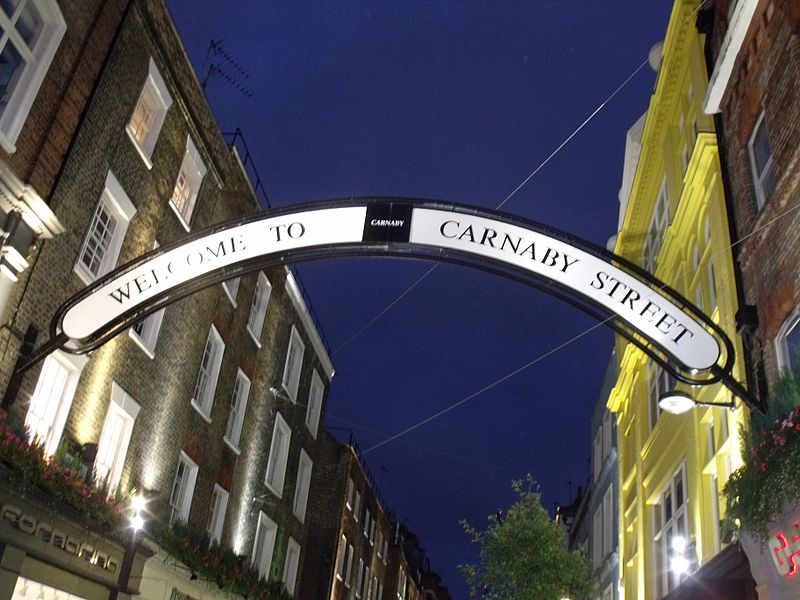
    Carnaby is still a little bit like it was in the 1960s

    Carnaby is still a little bit like it was in the 1960s

    First published on Suite 101, 5th April 2010.

    Filed under: Articles at Suite 101

    The Appeal of Torture as Mass Entertainment

    Should Others’ Suffering or Self-Inflicted Pain Be Watchable?

    UK Big Brother's late Jade Goody - Kiera76
    Down the ages, man’s inhumanity to man has been made into spectacle for the amusement of others. It seems some can’t help it. Today, many self-torture themselves on TV.

    Savage, barbaric, public sports as entertainment are not new. The standard method of execution recorded in the Bible Old Testament was public stoning. The Romans were masters at such mass events in gladiatorial arenas, men against men, soldiers against slaves, men against wild animals, all till the death. They also invented the crucifixion, one of the most cruel ways to die.

    As medicine and the treatment of diseases improved through the centuries, it was commonplace for the public to go and watch operations. Indeed, the term still in use today, ‘operating theatre’, dates from those times.

    Across Europe, Sunday afternoon visits to lunatic asylums were regular; the visitations providing an opportunity to make fun of the inmates. Until the 19th Century in Britain, all executions were public and the presence of food sellers and sideshow entertainers made them into carnivals enjoyed by people of all ages, including children.

    Extreme Japanese Game Shows

    Takeshi’s Castle originated on Japanese TV in the 1980s and it featured an actor playing the count of a castle where players had to undertake impossible tasks to reach him, a ‘live-action Super Mario game.’ It became a cult hit on world-wide television.

    Another was Endurance, an often seriously unpleasant show. Eating maggots, being wrapped in clingfilm and then snaking over an obstacle course of gravel; cycling after a pint of beer with a mouthful of mustard powder; clinging to a bar while a bungee crane pulls them upwards and having liquids thrown in their faces; eating maggot-filled quiche, blindfolded while having feet tickled: all part of the fun.

    Using clips from this on their UK television programmes, both Chris Tarrant and Clive James prolonged the effect of such violent sports being entertainment, with a slightly superior air, as if we are above such things in the west. However, people seem to enjoy watching others suffering, with no difference between one culture and another.

    The German language even has a word for it: schadenfreude, meaning “enjoyment of the misery of others.”

    According to Greg Braxton of the Los Angeles Times, TV and film producers increasingly see really graphic physical and mental torture as mainstream entertainment. Playing mind-games with performers and audience alike, is now accepted by many.

    Experiments and Theories About Torture

    In early 2010, a spoof game show on French TV, Le Jeu de la Mort (Game of Death), was broadcast showing members of the public being encouraged by a celebrity presenter and an audience to administer somebody with a potentially fatal electric shock.

    The person was an actor, but the perpetrators didn’t know that. He screamed in pain as apparent shocks were delivered. It didn’t stop the shocks coming. The atmosphere urged on the pain-givers, they were controlled by the crowd and, presumably, pleasure in their own brief fame.

    This was inspired by the early 1960s experiments conducted at Yale University in the USA, by psychologist Stanley Milgram. These sought to measure the willingness of participants to obey an authority figure in carrying out acts that conflicted with their consciences.

    He wanted to explore — three months after the start of the trial of the Nazi war criminal Adolf Eichmann — whether there was a mutual sense of suppressed morality in the Germans during the war, whether they were literally only obeying orders in the death camps.

    The experiment was conducted by an apparently stern professor attempting to improve learning and memory by administering electric shocks via a volunteer ‘teacher’. The hapless members of the public were under the impression they were delivering shocks in 15 volt increments to the learner as each wrong answer was given. The victim was in another room, but could be heard screaming, and then banging on the wall. Then there was silence. The ‘teachers’ were told they would not be held responsible.

    At various stages, many questioned the validity of what they were doing, right up to the potentially fatal 450 volts. It was thought in advance very few people would go on to inflict the maximum, knowing it was a fatal level, even believing they were advancing learning. In fact, 65% did so, even though they were uncomfortable with it.

    The conclusion was that on the commands of authority, most people will do whatever they are told, even inflicting untold pain on another person. These were not people doing it out of fear or threat to themselves or their families, but willingly despite any reservations. Later experiments in different settings and often with the victim and the ‘teacher’ in close proximity, confirmed the findings.

    Indeed, war atrocities and tortures, both public and hidden, since then only confirm that theory about the dangers lurking in the dark side of the human psyche. Nowadays, additionally, in search of what Andy Warhol described in 1968 as ‘in the future, everybody will be world-famous for fifteen minutes’, people gladly inflict deprivation and humiliation upon themselves, as the popularity of TV reality programmes like Big Brother (now in world wide versions), I’m a Celebrity, Get Me Out of Here (UK) and Castaway (UK), amply demonstrate.

    First published at Suite 101, 3 April 2010.

    Photo above: UK Big Brother’s late Jade Goody – Kiera76

  • Iron Maiden Torture Implement - LestatPhoto: Iron Maiden Torture Implement – Lestat
  • Read on

    Filed under: Articles at Suite 101

    Unusual Performance Spaces

    Site-Specific Events Turn Up in the Most Unlikely Places

    Street Theatre Makes Political Point - Ben Schumin
    English theatre director Peter Brook said in 1968 he could take any empty space and call it a bare stage. Nowadays, many performances turn any old spaces into stages.

    Whether seeing a play in a traditional theatre, a band in a huge auditorium or a sporting event in a magnificent arena, the setting is a major part of the total experience in terms of ambience and atmosphere. Increasingly in the arts, smaller, more intimate, non-specialist designed venues are the settings for performances of all sorts.

    Using a proscenium-arched stage, a thrust stage, a circus arena or, like at the Globe Theatre in London, a replica of Shakespearean style thrust-almost circular staging, makes a huge difference to the perception of the plays by the audiences. But a theatre company who bring a performance to a front room, a garden, a room upstairs in a pub or into the street invites participation in a unique and unusual experience. Indeed, street theatre is as often pure mad entertainment as heavy political message.

    New, Modern Settings

    London’s Tate Modern gallery is planning a new performing space to complement the existing flamboyant Starr Auditorium, possibly underground in a massive chamber that used to store oil when it was a power station. The design challenge is balancing state of the art equipment with the rough, authentically old and ‘found’ feel of the original use. The building will drive the performances, to an extent.

    In the UK The Young Vic in Waterloo has had a makeover adding bold textures within; the Unicorn Theatre for children uses startling colours, while the Contact Theatre, Manchester is proud of a soaring architectural ceiling. So the modern trend is for performance spaces to shout ‘experiment and edginess’ to support the dramas presented within.

    Manchester based Pigeon Theatre specialise in experimental and interactive work, that owes something to the Happenings or Events of the 1950s and 60s, which were often performance art, designed to make people think in old warehouses, on open air carparks or in disused shops and factories. Most recently they wrote to 148 people and asked what they’d like in a show, and devised a performance response, truly enacting other people’s nightmares, fantasies and humour.

    New Uses for Old Buildings

    Also in Britain, in Bristol, The Tobacco Factory Theatre occupies the first floor of what was once the Wills’ Tobacco factory. Now it is part of a mixed-use, multicultural arts venue, housing restaurants, creative industry workspaces, some apartments as well as animation and performing arts schools.

    The Menier in Southwark, London, is an award-winning 180 seat fringe studio theatre, restaurant and gallery, established from what was the Menier Chocolate Company factory. It has attracted quality drama, musicals (including the world premiere of Take Flight) and stand-up comedy.

    But not all site specific performances are done in buildings converted into theatres. In 2005, an old abattoir in Clerkenwell, London, hosted Underground, a piece inspired by Tolstoy’s Crime and Punishment. Actors mingled with audience, drawing them through the dark, dank setting, flickering light adding to the edginess.

    Site-Specific Performances

    Cafe Direct, the fair trade coffee company, hired the London Eye and packed each of the 32 glass capsules with various performances of theatre, comedy and music. Two thousand tickets were sold, and the place in the queue randomly determined which piece of entertainment passengers shared on the circuit of the big wheel.

    Wilson & Wilson are UK site-specific theatre experts, who have combined performance, art installations and dramatic imagination jolters, to evoke the spirit and history of actual settings. They have showed in workers cottages in Huddersfield, the hidden corners of Sheffield and a department store in Watford.

    Their conducted tour of the woods of Mulgrave, North Yorkshire, England, became what is known as promenade-theatre, with the audience moving through scenes and interpreted illustrations of true history. It mixed that historical view with fairy-tale and created a sense of unease and mystery in an old wood. It was a profound theatrical experience for all who saw it, startling and delighting, raising emotions, just the same as a good performance in a building should do.

    Punchdrunk Theatre company took over five floors of an abandoned bleak building in Wapping, London. The audience were asked to wear sinister carnival masks, and left to wander alone or in groups. The story was Faust, the man who made a pact with the Devil, but set in 1950s American mid-west, where historical detail mingled with imaginative terror as people stumbled through the dark to new locations, new characters, imagined worlds. People, in effect, made their own Hells.

    Signal to Noise presented a 12 minute, semi-improvised comedy based on the Godfather trilogy in UK Pizza Express restaurants, while people ate. All part of the night out, of course. Yet this, like all such unusual performance, is the entertainment. Everyone is part of it; and a part of it is everyone.

    First published at Suite 101, 1st April 2010, deleted by them in a Google algorithm purge, January 2012.

    Photo: Street Theatre Makes Political Point – Ben Schumin

    Read on

    Filed under: Articles at Suite 101

    The Bible in Popular Music

    Biblical Quotes and References Inspire Songs

    Boney M: The Rivers of Babylon - Brian Marks
    While inspiration comes in many guises, both Christian and secular songwriters have always drawn deep from the well of Biblical imagery. They are still doing it.

    In paintings, novels, short stories and theatre, the Holy Bible has been a standard and long-lasting source of ideas, human stories and world-truths . The pop music industry is at it, and always has been.

    “The Rivers of Babylon”, the Boney M hit of 1978 is written out of Psalm 137, “By the rivers of Babylon we sat and wept when we remembered Zion”. It is about the sadness of the Israelites asked to sing the Lord’s song in a foreign land; a plaintive song of the exile.

    There Is a Season

    The Byrds had a folk-rock hit with “Turn Turn Turn (There Is a Season)” with lyrics taken almost verbatim from the book of Ecclesiastes 3:1. There is a time for laughing, crying, healing, killing. It is still used as a peace anthem.

    “The toe bone connected to the heel bone. The heel bone connected to the foot bone. The foot bone connected to the leg bone. The leg bone connected to the knee bone…” and so on, is part of a traditional spiritual song “Dem Dry Bones”, written a hundred years ago and allegedly used to teach children anatomy in a fun way. The lyrics are based on the Book of the Prophet Ezekiel, 37: 1-14, when he visited the Valley of Dry Bones and brought them alive on the command of God. “Ezekiel cried, “Dem dry bones!” “Oh, hear the word of the Lord.”

    “Whenever God Shines His Light” a chart hit in 1989, dueting with Cliff Richard, plus “When Will I Ever Learn to Live in God?” are just two representative examples from the long, mystical/spiritual journey Van Morrison has made. Fellow Irishman Bono of U2 is credited with a huge catalogue of songs inspired by the Bible.

    From the album “Boy” comes “I Will Follow”: “If you walk away, walk away I will follow” (Ruth 1:16). The album “October” has seven Biblically-inspired songs, including “Fire”, “The sun is burning black … the moon is running red … the stars are falling down”, (Revelation 6, 12-13); “Tomorrow”, “Who tore the curtain? Who was it for?”, (Matthew 27:51); and “With a Shout”, “God has gone up with a shout, the LORD with the sound of a trumpet.” (Psalm 47:5). There are many more songs inspired by the bible.

    The Two Bobs

    Bobs Dylan and Marley have used religious imagery. Dylan went through a born-again Christian phase in the late 1970s, and released two albums of Christian gospel music, “Slow Train Coming” (1979) and “Saved” (1980). During this period he refused to sing his secular songs on stage, and that was naturally unpopular with some fans.

    Jamaican reggae master Bob Marley was a key member of the Rastafari movement taking the music from the slums to the world stage. He was in the Tribe of Joseph, as each month of birth matched a tribe from the Bible, and his was February.

    He sang and produced literally dozens of Bible-based songs from “Adam And Eve”, “Blackman Redemption”, “Cry To Me”, “Exodus”, “Give Thanks And Praise”, “Judge Not”, “One Love/People Get Ready”, “Stiff Necked Fools”, “Time Will Tell”, “Wisdom” and “Zion Train”. “Stand Up For Your Rights” is both a political and a religious song. Rumours persist that he may have rejected Rastafarianism and embraced Christianity before he died.

    Other Bible Using Singers

    Jewish-Canadian Leonard Cohen draws frequently on old testament references, and his classic “Hallelujah”. ”Now I’ve heard there was a secret chord, that David played, and it pleased the Lord”. This is directly from the psalmist King David’s temptation and subsequent sinning with Bathsheba, another man’s wife.

    Sometimes references can be obscure, but many are blatant. For instance, “12 Days of Christmas” by Straight No Chaser; “Babylon’s Burning” by W.A.S.P.; “Bible Song” by Sara Evans; Amy Grant’s “Breath of Heaven (Mary’s Song)”: “Crystal Blue Persuasion” from Tommy James and The Shondells; “Every Goliath Has Its David” recorded by The Boy Least Likely To; “Gloria: In Excelsis Deo” from Patti Smith and Johnny Cash’s “I Corinthians, 15:55”.

    The artists go on, from Echo and the Bunnymen to Rush, and from Genesis to Eric Burden. Others are more controversial: “Leviticus: Faggot” by Me’Shell Ndegeocello; and “Little Horn” by Marilyn Manson. Heavy metal has a go in “The Four Horsemen” (Metallica) and the Broken Family Band unashamedly sing of “Walking Back To Jesus Parts I, II & III”.

    It’s difficult not to feel that there is much more lyrical mileage in the Book yet to serve writers and singers for generations to come.

    First published on Suite 101, 26 March 2010.

    Photo: Boney M: The Rivers of Babylon – Brian Marks

    Filed under: Articles at Suite 101